How Hosting a Fitness Website Can Attract More Clients
In today’s digital world, fitness professionals and wellness coaches are no longer limited to growing their client base through word of mouth or local advertising. With more people searching for workouts, nutrition tips, and personal trainers online, having a fitness website has become one of the most powerful tools for attracting new clients.
Whether you’re a personal trainer, gym owner, yoga instructor, or online fitness coach, hosting a well-structured website can significantly improve your visibility, credibility, and revenue.
In this detailed guide, we’ll explore why hosting a fitness website matters, what features attract clients, and how you can optimize your website to stand out in a competitive fitness industry.
Why Hosting a Fitness Website Matters
A dedicated fitness website is more than an online brochure. It becomes:
- A marketing tool
- A client acquisition platform
- A hub for your fitness services
- A brand-building machine
- A source of passive revenue (through programs, ebooks, supplements, etc.)
Let’s break down why hosting a fitness website is essential.
1. It Builds a Professional Online Presence
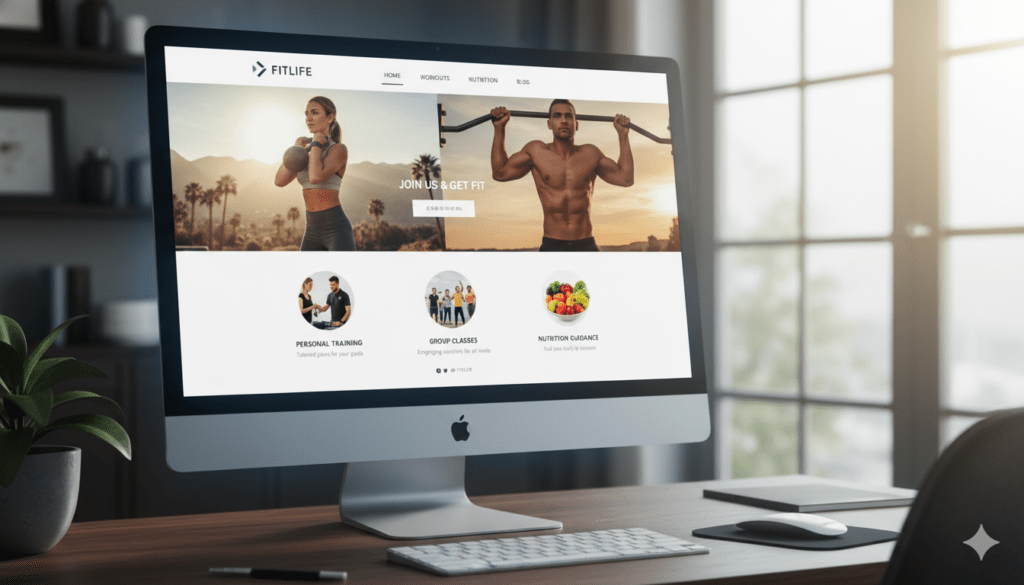
In a competitive industry, professionalism helps you stand out. A website instantly tells potential clients:
- You are serious about your business
- You offer structured services
- You can be trusted with long-term goals
Most clients research online before choosing a trainer. If they cannot find your website, they may move on to someone who has one.
2. It Helps You Reach More Clients (Locally & Globally)
With a website, your potential reach expands dramatically.
You can attract:
- Local clients searching for fitness services (SEO-based traffic)
- People looking for online coaching
- Individuals wanting diet plans, workout plans, or consultations
- Corporates needing wellness programs
SEO-optimized pages (like “personal trainer near me” or “online fitness coach”) can bring organic traffic without ongoing ad spend.
3. You Can Showcase Expertise (Boosting EEAT)
Google prioritizes content that shows Expertise, Experience, Authoritativeness, and Trustworthiness (EEAT).
A website gives you space to demonstrate:
✔ Your qualifications
✔ Your transformation results
✔ Your client testimonials
✔ Your blogs and educational content
✔ Your certifications and licenses
All these elements increase trust and help build long-term relationships.
4. You Can Sell Digital Fitness Products
A hosted platform enables you to create multiple income streams, including:
- Workout programs (PDF or video)
- Nutrition guides
- Membership sites
- Online classes
- Meal plans
- Ebooks
- Coaching subscriptions
This is one of the biggest reasons fitness professionals build websites—scaling income without trading hours for money.
5. You Control Your Brand (Unlike Social Media)
Relying only on social platforms can be risky:
- Algorithms change
- Accounts get restricted or hacked
- Posts have limited reach
Your website is an asset you own fully.
It allows you to shape your brand’s message, design, and client experience with complete flexibility.
6. Websites Help Clients Contact You Easily
Your website becomes a centralized hub for inquiries:
- Contact form
- WhatsApp lead button
- Email subscribe box
- Booking calendar
- Free consultation CTA
- Online scheduling tool
This reduces friction and increases conversions.
Key Features Every Fitness Website Must Have
If you want your fitness website to attract clients effectively, it must include certain essential elements.
1. A Professional, Clean Design
Your design should be:
- Modern
- Easy to navigate
- Mobile-responsive
- Fast loading
A clean design helps convey a sense of trust and quality.
2. A Clear Breakdown of Your Services
Clients need to understand what you offer within seconds.
Your service page should include:
- Personal training packages
- Online coaching plans
- Group workout classes
- Nutrition coaching
- Specialized programs (weight loss, muscle gain, mobility, etc.)
Use simple language and emphasize benefits.
3. A Strong About Page
People want to know who is training them.
Your About page should highlight:
- Your fitness journey
- Your certifications
- Your experience
- Your mission
- Why clients trust you
4. High-Quality Images & Videos
Visual content is essential in fitness branding.
Include:
- Workout photos
- Client transformation images (with permission)
- Video demos
- Gym/studio environment
This adds credibility and helps clients visualize working with you.
5. Testimonials & Social Proof
Social proof significantly boosts conversions.
Include:
- Before & after photos
- Text/video testimonials
- Case studies
- Reviews from Google/MyFitnessPal/Instagram
6. Fitness Blog to Increase SEO Traffic
Regular blog posts help your website rank higher.
Topics include:
- Workout tips
- Healthy recipes
- Weight loss strategies
- Home fitness guides
- Gym routines
Google rewards websites with consistent, helpful content.
7. Online Booking & Payment System
Make it easy for clients to:
- Book sessions
- Pay online
- Schedule consultations
- Reserve class spots
User convenience = higher conversion.
How Fitness Websites Attract Clients (Direct & Indirect Ways)
A fitness website helps you grow clients through several powerful channels.

1. Organic Search (SEO)
When people search for:
- “Personal trainer near me”
- “Online fitness coach”
- “Weight loss trainer”
Your website can appear in the results.
2. Social Media Traffic
Your website acts as a hub for your Instagram, Facebook, TikTok, and YouTube followers, turning them into paying clients.
3. Paid Advertising
A website helps you run professional ads:
- Google Ads
- Meta Ads
- YouTube Ads
Landing pages convert far better than social media DMs.
4. Email Marketing
Collect emails through:
- Free guides
- Newsletter
- Workout challenges
Then nurture subscribers into clients.
5. Word of Mouth & Trust Building
When someone hears about you, they will immediately check your website.
A professional page makes them confident to book a consultation.
Technical Hosting Requirements for a Fitness Website
The hosting you choose directly impacts your site’s performance.
Look for hosting with:
✔ Fast load speeds
✔ SSL security
✔ Daily backups
✔ Good uptime
✔ Easy WordPress installation
✔ Scalability for future growth
✔ Customer support
Fitness websites often use platforms like:
- Bluehost
- SiteGround
- Hostinger
- WPX Hosting
- Cloudways
These are well-known for stability and speed.
How to Promote Your Fitness Website
Once your hosting and design are ready, start promoting your site.

Effective strategies:
- Share workout tips on TikTok & Instagram
- Link your website in your bio
- Offer a free consultation through your website
- Run Google ads for local leads
- Post 2–3 blogs per week
- Create lead magnets (e.g., 7-day workout plan)
Web Hosting for Nutrition Blogs: What to Look For
FAQs
1. Do fitness professionals really need a website?
Yes. A website acts as your digital identity, helps you reach more clients, and strengthens your brand.
2. Can I run my fitness coaching business completely online?
Absolutely. Many trainers earn consistent income through digital coaching, workout plans, memberships, and virtual classes.
3. What type of hosting is best for fitness websites?
A fast, secure hosting provider like SiteGround, Hostinger, or WPX is ideal for WordPress fitness websites.
4. Does blogging help attract clients?
Yes! Blogs improve SEO, increase organic traffic, and establish your expertise.
5. How much does hosting a fitness website cost?
Typically between $2 to $25 per month, depending on speed, features, and security.
External Resources (Helpful & Safe Sources)
- American Council on Exercise (ACE) – https://www.acefitness.org/
- NASM (National Academy of Sports Medicine) – https://www.nasm.org/
- MyPlate Nutrition Guide – https://www.myplate.gov/
- WordPress.org Website Hosting Guide – https://wordpress.org/hosting/
Final Thoughts
Hosting a fitness website is one of the smartest decisions you can make as a trainer or coach. It sets you apart from the competition, boosts your credibility, increases client inquiries, and opens up multiple income streams.
A strong website combined with consistent content, proper hosting, and strategic promotion can transform your fitness business into a scalable, client-attracting platform.