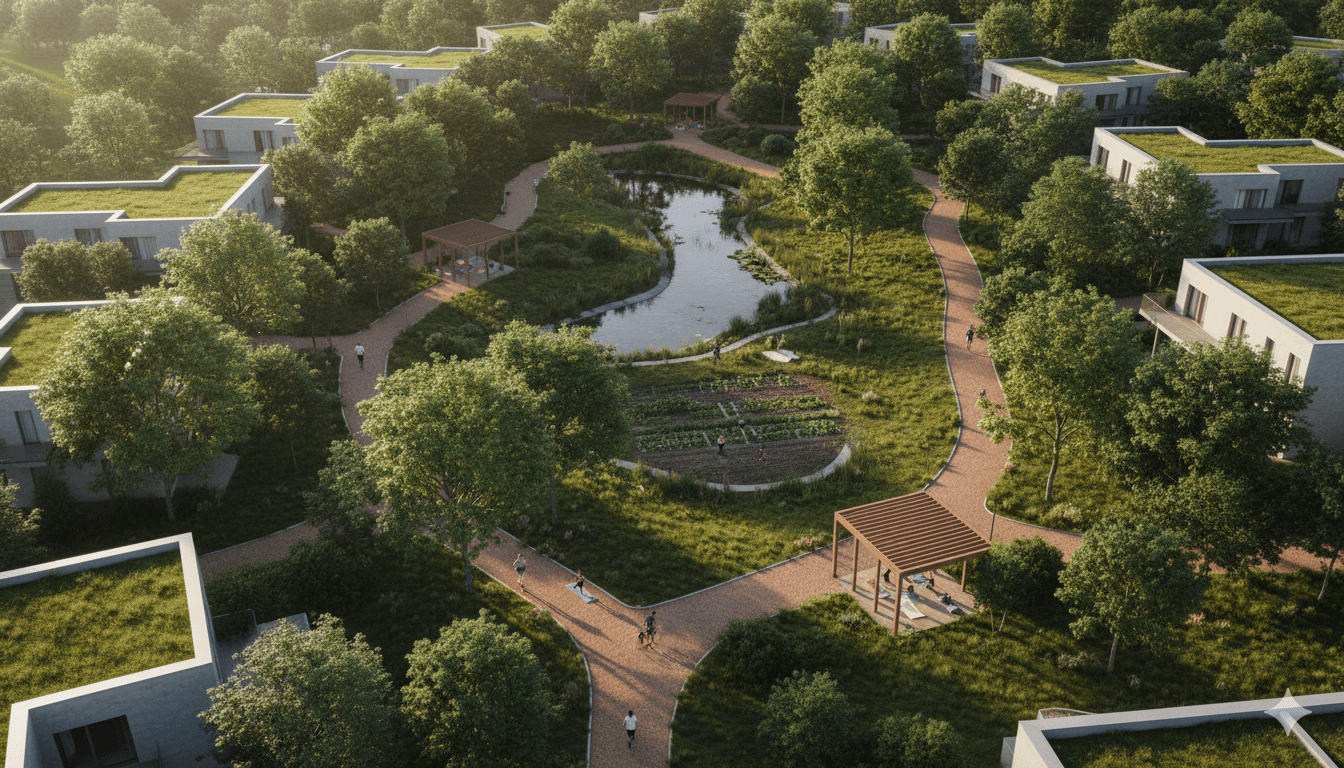
How To Make Real Estate Investments in Wellness-Focused Communities
Wellness real estate grew 23% in 2025 while global construction grew just 3%, and homes built around health now sell at a 10–25% premium. Here is how to invest in that shift without paying for marketing alone.
Why the numbers are hard to ignore
The Global Wellness Institute (GWI) says wellness real estate grew from $151 billion in 2017 to $876 billion in 2025 and could reach $1.8 trillion by 2030. That makes it the fastest-growing sector of the wellness economy, expanding at roughly 23.5% a year since 2019.
The United States leads at $254 billion, followed by China at $218 billion and the United Kingdom at $51 billion. Growth is fastest elsewhere: Italy, Spain and Saudi Arabia posted annual gains of 50%, 46% and 34% from 2019 to 2025. In the UAE, wellness projects went from $3.3 billion in 2017 to $14.6 billion in 2025, more than 12% of the country’s construction activity.
Buyers are paying for it. GWI research finds that wellness-focused homes in the middle and upper market sell for 10–25% more than comparable properties. Sotheby’s 2026 mid-year luxury outlook, as cited by the Fitwel certification body, reports the same range.
What makes a community genuinely wellness-focused
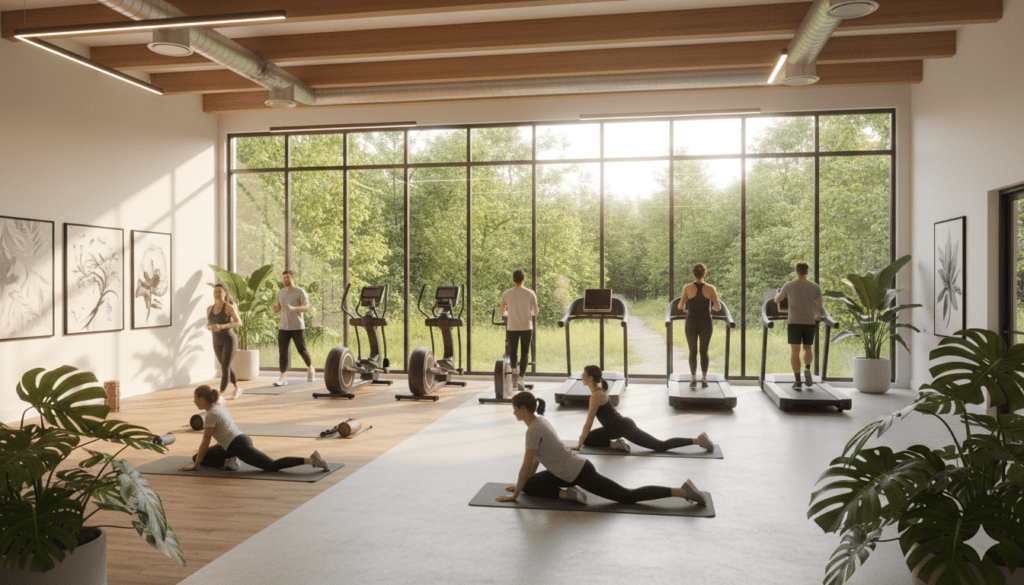
GWI defines wellness real estate as built environments designed, built and operated to support the health of occupants and the wider community. The word that matters is operated. A gym and a yoga lawn do not make a wellness community.
GWI’s 2026 trends report points to six shifts worth knowing:
- Location as health: where you live shapes how long you live.
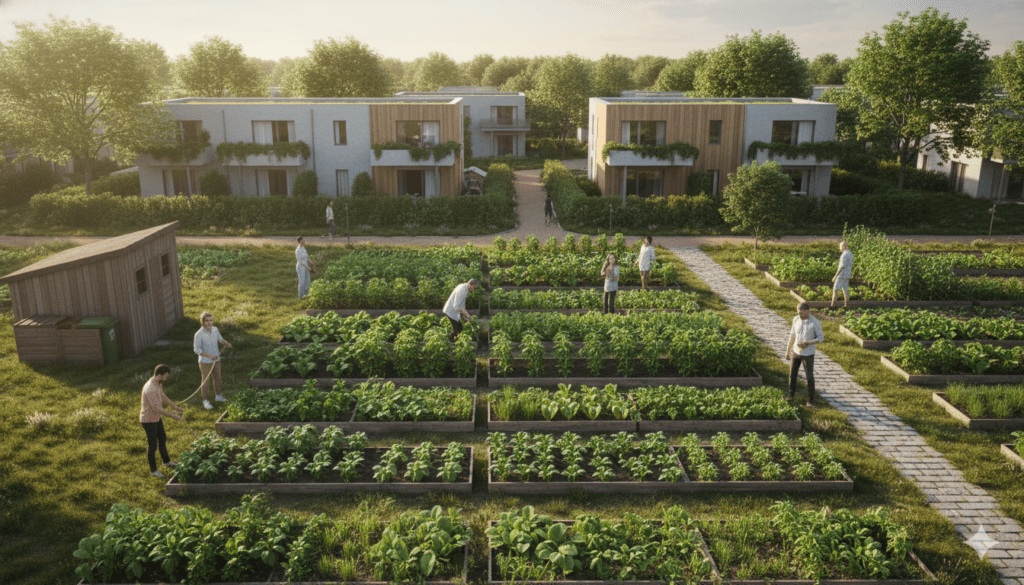
- Land first: a farm, vineyard or regenerative landscape comes first, and homes are designed around it.
- Middle-market wellness: healthy design is moving beyond luxury.
- Smarter neighborhoods: sensor-driven homes and districts.
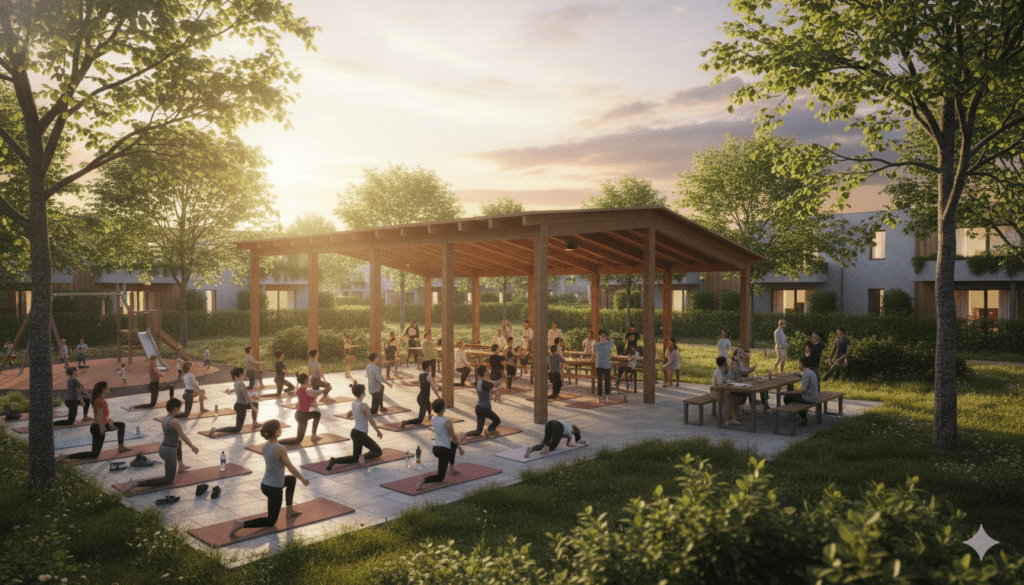
- Social connection as a design brief: buildings planned to reduce loneliness.
- Longevity residences: projects with preventive medicine and clinical partnerships built into the product.
In the UAE, developers say the differentiator is shifting from having amenities to running them well. Look for that in any project you evaluate.
Four ways to invest
- Buy into a community that already operates. A resale home or lot in a community with residents, working amenities and a management track record carries far less risk than a render. You pay a premium, but you can see what you are buying.
- Hold certified buildings for rent. Cambridge University research from 2025, as cited by Fitwel, found health-certified buildings earn a 4.4–4.8% rent premium. Fitwel promotes certification, so treat that source as an advocate and check the study yourself.
- Retrofit what you already own. One UK office refurbishment reached WELL Gold for about 2% of its refurbishment budget (roughly £100,000). The owner could not isolate the effect on rent, but expected faster letting and shorter voids.
- Back an early-stage project, carefully. “Land first” developments offer the largest upside and the largest execution risk. Use a fund or syndicate with a real operating history, not a brochure.
Whichever route you take, aim for the middle of the market. GWI’s own trends point to wellness spreading beyond luxury, where more buyers and renters can support your exit.
A due-diligence checklist
- Operator track record. Who runs the amenities and programming, for how long, and who pays when they fail?
- Operating costs. Ask for a budget of maintenance, staffing and HOA or service charges. Wellness features can be expensive to run.
- Evidence of use. Look at occupancy, resale prices and rental demand inside the community, not only the sales brochure.
- Certification substance. Check what a label actually verifies. One 2021 critique noted that some certifications rely on written health policies rather than on-site practice, and fees can run to $98,000.
- Comparable pricing. Test the claimed 10–25% premium against nearby non-wellness sales. Premiums vary by market and price band.
- Core real estate basics. Location, title, financing costs and your exit buyer matter more than any amenity.
Risks to respect
Hype and greenwashing. Wellness claims have little standardisation. A property does not need to be dishonest for an allegation of overstated claims to damage its reputation and invite legal scrutiny. Keep your own marketing measurable.
Thin benchmarks. A CoStar analysis of wellness hotels warns of very limited reporting standards and benchmarking data, and notes that profit can be masked by PR. Resorts and destination spas add seasonality risk.
Hard-to-prove returns. The UK refurbishment owner above admits that tracing wellness spending to rents is nearly impossible. Underwrite the property on ordinary cash flow and treat any premium as upside.
Affordability and fit. An Ohio Realtors interview notes that most households are one or two people, yet most new homes are 2,000–4,000 square feet, and larger homes bring higher insurance, maintenance and tax costs. Smaller, walkable homes may suit more buyers.
Cycle risk. At $876 billion and rising fast, the segment attracts capital quickly. Rapid growth can lead to oversupply in popular markets.
Best Fitness Software to Track Your Progress in 2025: Apps, Tools & How to Pick the Right One
The final word
The health-and-wealth case is real, but the premium goes to communities that deliver wellness every day, not to those that merely advertise it. Start with an operator you can verify, buy at a price that works without the premium, and favor the middle market where demand is broadening. This post is general information, not financial or legal advice. Consult a licensed adviser before you invest.
Sources
- Global Wellness Institute: Wellness real estate market reaches $876 billion (May 12, 2026)
- GWI: Wellness Communities and Real Estate Initiative trends
- GWI: price premium research
- Khaleej Times: Dubai wellness real estate (Aug 2, 2026)
- Khaleej Times: UAE lifestyle-led communities (Jul 13, 2026)
- Fitwel: The market has moved
- Place North West: The real cost of wellness
- FITT Insider: The next real estate frontier (2021)
- CoStar: Risks and opportunities of wellness trends in hotels
- Vinson & Elkins: Real estate’s sustainability challenge
- Ohio Realtors: What wellness design really means
Figures were taken from search results rather than full-page reads, and some sources date from 2021. Check the latest figures against GWI’s full 2026 Wellness Economy Monitor, due in November.