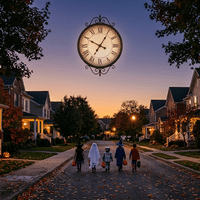
Daylight saving time (DST) ends in the United States on Sunday, November 1, 2026, at 2:00 a.m. local time, when clocks move back to 1:00 a.m. That lands the morning after Halloween, and it is the earliest date the calendar allows.
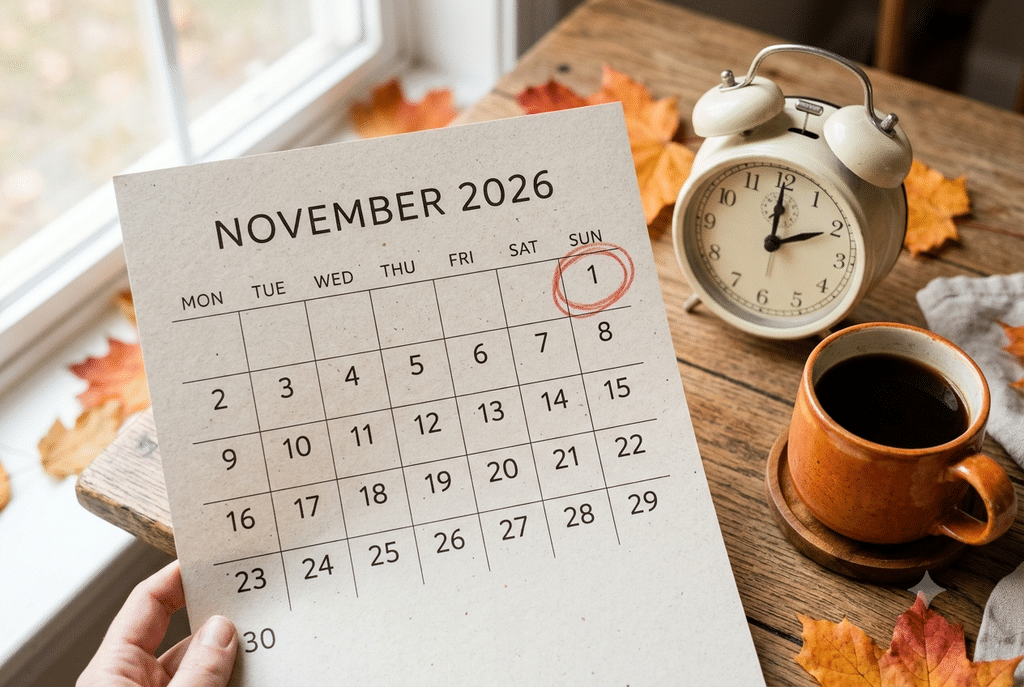
The date, the time and why it feels early
Under federal rules, DST runs from the second Sunday in March through the first Sunday in November. In 2026 the first Sunday in November falls on the 1st, so the change arrives as early as it possibly can. Most phones, laptops and smart devices update on their own. Older clocks, ovens and car dashboards still need a manual reset.
The practical rule is simple: set non-automatic clocks back one hour before bed on Saturday, October 31. Your body gets the benefit that night, a 25-hour day with an extra hour of sleep, but it also means evenings get darker sooner from Sunday on.
How the Halloween weekend lines up
Halloween falls on Saturday, October 31, so the clocks change in the early hours after the parties end. For once, the extra hour comes at the best possible time: late-night revelers get a longer sleep, and parents who are up with excited kids get a little mercy.
The catch is what comes after. From Sunday, sunset arrives an hour earlier, so the first evenings of November are noticeably darker. That matters because Halloween is already a risky night on the road. A study of NHTSA pedestrian fatality data from 1975 to 2016 found the risk of a pedestrian being killed by a vehicle was 43% higher on October 31 than on comparable nights a week before or after. For children aged 4 to 8 it was about ten times higher, and 6 p.m. was the deadliest hour.
In 2026, trick-or-treating still happens under daylight saving time, so you have the later light this year. The lesson is for the days that follow: weekend parties, school events and evening commutes all move into the dark.
What it does to your sleep and health
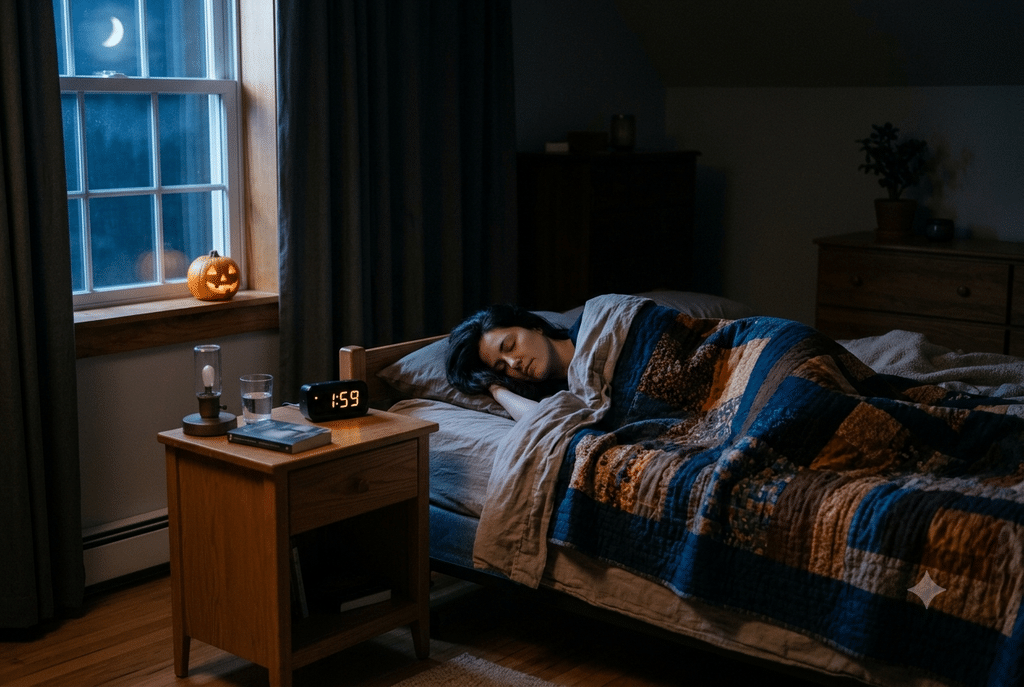
Falling back is usually easier than springing forward, but the shift still nudges your body clock. Sleep specialist Dr. Yosef Krespi has said it can take a few days to feel fully normal, and that sleeping in on Sunday can leave you off-kilter for the week.
The heart-risk worry is more reassuring than the headlines suggest. A Duke University study in JAMA Network Open looked at about 170,000 heart attack patients from 2013 to 2022 and, using Arizona and Hawaii as controls, found no significant rise in heart attacks around either clock change. The one spike, in spring 2020, coincided with the start of the COVID-19 pandemic. Co-author Dr. Jennifer Rymer noted that chronic poor sleep still raises cardiovascular risk. So the clock change is not the problem, but protecting your sleep year-round is the point.
Older studies had suggested small, temporary effects, so the science is still debated. If you have a heart condition or a sleep disorder, treat the weekend as a reason to keep a steady routine and ask your doctor about anything unusual.
Who skips the change, and will it end?
Not everyone resets their clocks. Hawaii and most of Arizona stay on standard time all year, though the Navajo Nation in Arizona does observe DST. Puerto Rico, the U.S. Virgin Islands, American Samoa, Guam and the Northern Mariana Islands also skip the seasonal change.
The bigger question is whether the rest of the country will keep doing it. The Sunshine Protection Act would end the twice-yearly switch and keep most of the U.S. on DST year-round. The House passed it on July 14, 2026, by a 308–117 vote, and it was then referred to the Senate Commerce Committee. As of the latest reports I found, it has not become law, and the Senate had not scheduled a vote as of late August.
The debate is real. Supporters say people want an end to clock changes. Opponents, including Sen. Steve Daines and Sen. Tom Cotton, warn of very late winter sunrises and children walking to school in the dark. Until Congress acts, the November 1 change goes ahead. Check the news before you set your clocks, since the situation can change.
Practical tips for the weekend
- Set manual clocks back before bed on Saturday, October 31. Phones and most smart devices update themselves.
- Keep your normal wake time on Sunday. Use the extra hour for a morning walk or a solid breakfast rather than sleeping past sunrise.
- Protect Sunday night’s sleep. Keep the bedroom quiet, cool and dark, and go to bed at your usual time even though it is dark an hour earlier.
- Get morning light. Sunlight helps reset the body clock, so step outside early for the first few days.
- Ask a doctor before using melatonin. Experts quoted by Good Morning America note a low evening dose may help, but it can cause drowsiness and interact with other medicines.
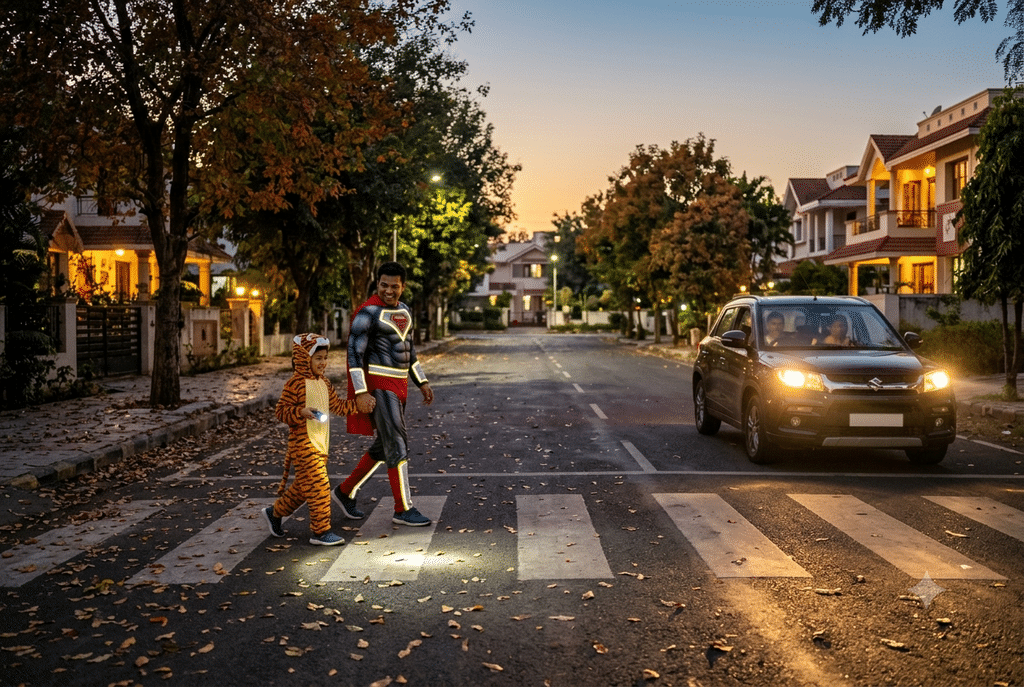
- Drive and walk defensively. After Halloween, evening commutes and school events happen in the dark. Wear reflective gear, slow down in neighborhoods and avoid distractions.
The bottom line
This year the clock change and Halloween share a weekend: a fun Saturday, an extra hour of sleep and a darker Sunday evening. Science suggests the shift itself is unlikely to harm most healthy people, but good sleep habits and road caution matter. Whether this is one of the last times we fall back depends on the Senate, so keep an eye on the news.
Sources
- Farmers’ Almanac: Daylight Saving Time 2026
- ABC13: Daylight saving time 2026 ending
- Reuters via Galveston Daily News: Could DST become permanent?
- SAN: Daylight saving time may mess with your sleep, not your heart
- NBC News: Halloween can be a deadly night for children
- Good Morning America: Tips for falling back (originally from 2013)